






Articles
After the BELA Act came into force, education officials increasingly require registered parents to meet conditions that could negatively affect home learners, but are not required by law. Some examples of this are:
- On 24 July 2025, Mr. Alan Meyer of the WCED reported to parliament that registration process for home education will be automated. The process will confirm that approved curriculums are used, it will check the qualifications and random home visits will be done. After Cape Home Educators wrote a letter to the WCED, Mr. Meyer retracted his statement and clarified that parents can use any curriculum, parent qualification are not checked and home visits are not allowed.
- In December 2025 the DEB published circular S24 that provides clarity on how to determine to determine whether a curriculum is "predominantly comparable" with the national curriculum. This circular is however complex to implement, is open to subjective interpretation and will likely increase conflict between parents and education officials.
- In January 2026 the DBE published a post on X stating that home educators had to provide various documents including immunisation records in order to register for home education. Although the post was removed after a backlash from home educators, it offers some insight into the thinking of education officials.
- In February 2026 a parent attended an online meeting of the Gauteng Education Department (GDE) and provided the following feedback : "Today, there was an online meeting organized by the Department of Basic Education and home educators who just recently registered. The DBE representatives confirmed that assessments are required at the end of phase, which are grades 3, 6, and 9. They ask parents to submit reports every term if they can. It is not mandatory to submit each term. What they also clarified is that home visits from the department to check on home educators is no longer required according to the BELA bill. But parents can request visits if they need them."
- In March 2026 the Pestalozzi Trust published a Red Alert reporting that their members had been told by Gauteng officials that:
- Parents are not allowed to teach a learner beyond the prescribed grade level or complete more than one grade in a year.
- If parents teach ahead of grade level, there will be compulsory home visits.
- Home learner registrations will not be renewed for the next phase without a report from a competent assessor.
- End of Phase assessments may not include multiple choice questions.
- In May 2026 a message was distributed on a WhatsApp group reporting that the Western Cape Education Department (WCED) has distributed a message to parents requiring them to submit a "monitoring tool" that lists "areas for curriculum implementation and monitoring", as well as a "minimum list of evidence to be collected".
These recent incidents have raised the stakes for registration. For some families—particularly those following structured curricula or planning a return to the school system—registration may still provide stability and recognition. For others, registration is becoming increasingly risky.
If your child is registered for home education and you are confronted with officials that make unlawful demands, please note that you are not obligated to comply with unlawful requests. You can also click here to book a consultation with SA Homeschoolers. We offer a service to resolve potential conflict through mediation.
Legal & Research
Homeschooling and the law
Home schooling was recognized in 1996 in Section 51 of the SA Schools
+ ViewCentres
Support




Curriculums

SAHomeschoolers Consultations
SAHomeschooler offers personal consultation to get parents started ...


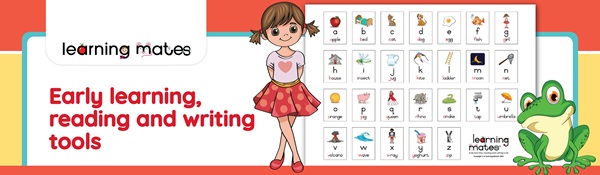
Learning Mates: Early Learning ...
Learning Mates Start smart: Tools for early learning success ...
Frequently Asked Questions
-
What is home education or homeschooling?
Home education is the oldest form of education. The school system as we know it is actually fairly new. It is done under the guidance and the...
-
Where can I find homeschool support groups?
There are many support groups consisting of parents that do things together and help each other. These groups operate on Facebook, mailing lists and...
-
Is homeschooling legal in South Africa?
Yes. Since 1994, the right for parents to home educate their children was legalised in South Africa through the adoption of the new constitution. In...
-
Do homeschoolers take holidays?
Yes, they take breaks. Some homeschool families follow the public school year calendar especially if they are involved in sport and music...